
The useful answer
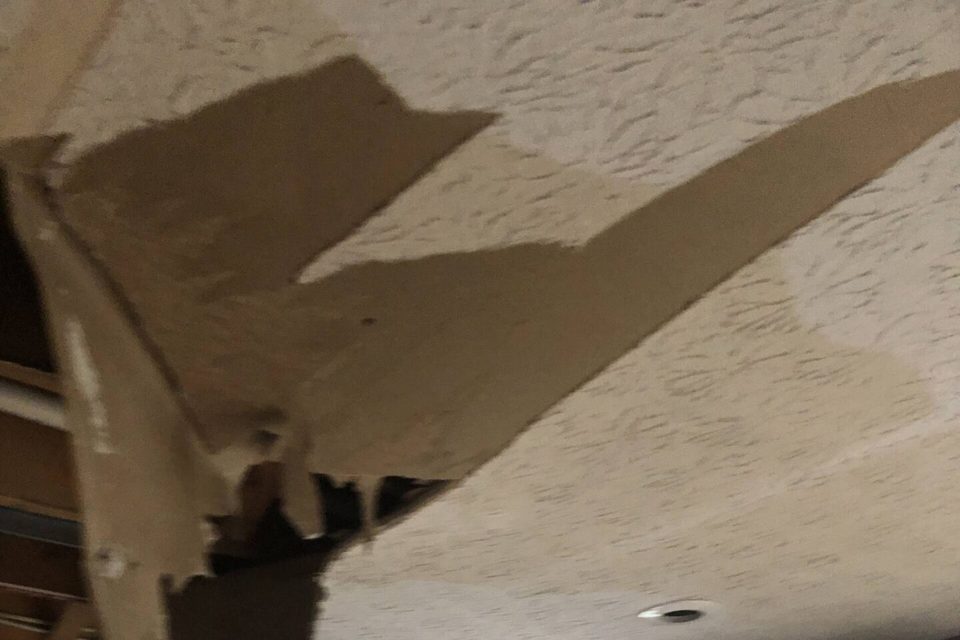
From a safe location, record when the stain appeared, the rain timing, changes after rainfall and the rooms above or beside it. A stain alone cannot distinguish a roof leak, plumbing leak or condensation. Keep clear of sagging material and have the source and affected finishes assessed.
Build an observation note without guessing the cause
| Record | Example of a useful note | Ask next |
|---|---|---|
| Timing | First noticed during rain; changed after rain stopped, if observed. | What incident history will help locate the source? |
| Visible change | Stain dimensions and changes photographed from a safe position. | Does adjacent insulation, framing or another room need assessment? |
| Building context | Upper floor or attic above; recent roof or plumbing work, if known. | Who investigates and repairs the source? |
| Before repainting | Source-repair record and explanation of retained-material condition. | What evidence supports covering the affected area? |
Copy these four headings into your incident notes. Leave uncertain causes marked unknown rather than diagnosing them from appearance.
Record the pattern safely
Note when the stain appeared, which rain event preceded it and whether it changed after the rain stopped. Photograph it from a safe location. Do not stand below a sagging ceiling, puncture it or enter an unsafe attic.
Keep the cause open
The visible stain may be away from the entry point. Roof, plumbing, condensation and other building conditions can require different investigations. Describe observations without telling the provider an unverified diagnosis.
Ask about adjacent materials
Discuss whether nearby insulation, framing or finishes need assessment. If the source is repaired, ask how retained materials will be checked before repainting. Cosmetic work alone does not explain whether the underlying condition is resolved.
Related restoration services
Moisture inspection
A moisture inspection helps define what is affected, where water may have traveled and what needs closer investigation. Readings should be explained in the context of the material.
Read moreStructural drying
Drying is a measured process. Air movement, dehumidification and repeated moisture checks help a provider decide when affected materials are ready for the next step.
Read moreSources and further guidance
- EPA mold and moisture guidance
- Raleigh flood-risk information
- National Weather Service Raleigh
- EPA flooded-home guidance
- North Carolina insurance consumer assistance
Explore the Learning Center · More focused answers in the Blog