
The useful answer
First establish whether the area is safe to approach. From a safe location, record the source, timing and affected rooms, then ask a restoration provider to define the assessment and written scope. Do not enter contaminated water or an electrically unsafe area to gather details.
Choose the next action from what you can observe
| Observation | Next action | What to tell the provider |
|---|---|---|
| Water near electrical equipment, sewage or structural damage | Keep people and pets away; follow emergency or utility instructions. | Describe the hazard without entering the area. |
| A source is still releasing water | If safely accessible, use the appropriate shutoff; otherwise contact the utility or source-repair professional. | When it started, whether it is ongoing and who is addressing the source. |
| The source stopped but finishes are wet | Arrange assessment of removal, hidden moisture and drying. | Affected floors, rooms and materials; request an itemized scope. |
Use the relevant row as a call-preparation note. The provider must assess the actual conditions; this table does not certify safe entry.
Start with safe access
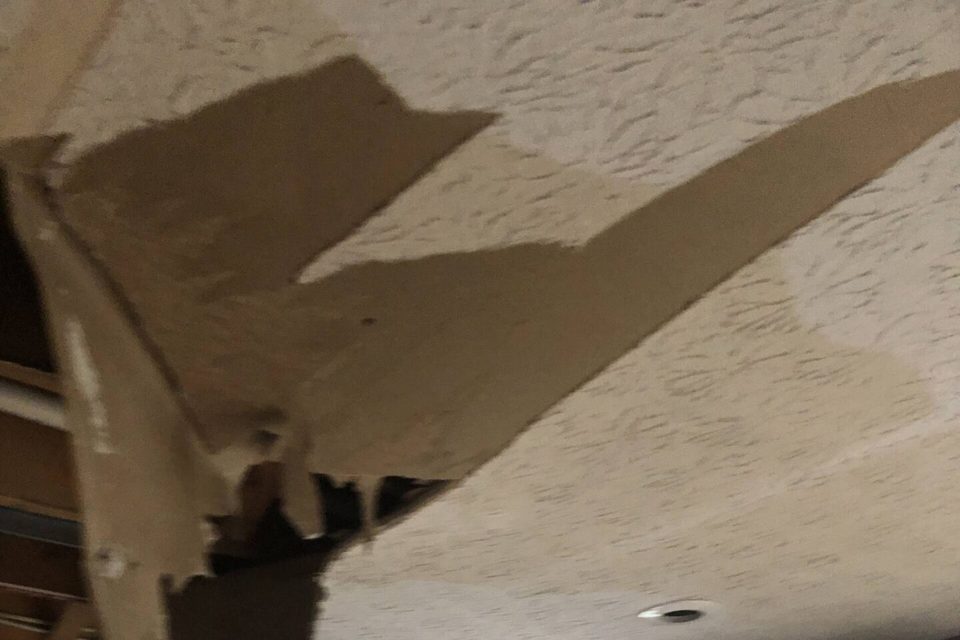
If there is immediate danger, call emergency services. Keep out of standing water around electrical systems, a sagging ceiling, unstable rooms or potentially contaminated areas. A photograph is useful only when taking it is safe. Follow emergency officials and utility instructions before entering.
Record what happened
Write down when you noticed the water, the source if known and the rooms affected. Photograph visible conditions from a safe location. Keep receipts and ask your insurer what records it needs. Avoid guessing the cause when it is still uncertain.
Prepare the first call
Have the complete street address, building type, affected floors, source status and access instructions ready. Explain whether sewage, outside floodwater or visible mold is involved. Those details can change the work and service eligibility.
Ask for a defined scope
Get the provider’s company name, expected assessment process and written scope. Separate extraction, drying, demolition, disposal and rebuilding. Ask how changes will be approved and how progress will be documented.
Related restoration services
Water extraction
Standing water is only part of the problem. An extraction assessment identifies the source, affected materials and safe access before deciding how water can be removed.
Read moreBurst pipe cleanup
After a pipe or supply-line failure, stopping the source and addressing the wet building materials are separate jobs. Describe both when arranging help.
Read moreSources and further guidance
- EPA mold and moisture guidance
- Raleigh flood-risk information
- National Weather Service Raleigh
- EPA flooded-home guidance
- North Carolina insurance consumer assistance
Explore the Learning Center · More focused answers in the Blog